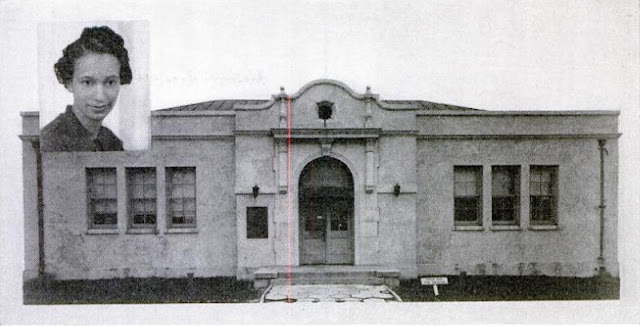
The Lost Legacy of Sugar Hill: Jacksonville’s Forgotten Black Wall Street


Once a thriving hub of Black excellence, Sugar Hill in Jacksonville, Florida, was home to doctors, entrepreneurs, and community leaders. It stood as a beacon of success, proving that prosperity was possible despite racial barriers. But like many Black communities across the U.S., Sugar Hill was unfairly labeled as "hazardous" on redlining maps, leading to disinvestment and destruction.

The Rise of Sugar Hill

During the early 20th century, Sugar Hill was one of Jacksonville’s most prestigious Black neighborhoods. Wealthy and middle-class Black families built businesses, churches, and cultural institutions that strengthened the community. It was a place where Black success flourished despite segregation.


The Fall: Redlining and Urban Renewal

Sugar Hill’s decline wasn’t accidental—it was systematic. The neighborhood was marked as high-risk on the HOLC (Home Owners’ Loan Corporation) redlining maps, making it nearly impossible for residents to secure home loans and business funding. Over time, disinvestment set in. Then came the construction of highways, cutting through the heart of the community and displacing families. What was once a proud and thriving neighborhood faded into history.

What Remains Today?

Few traces of Sugar Hill’s legacy remain, but its impact on Jacksonville’s Black history is undeniable. Many believe the city should do more to recognize its significance. Should there be historical markers? Community investment? Efforts to restore what was lost?

Watch the Full Discussion

In our latest live stream, we dive deep into the history of Sugar Hill, redlining, and urban renewal’s lasting impact on Jacksonville’s Black community.

📺 Watch now on Rumble: Sugar Hill: Jacksonville’s Forgotten Black Wall Street

What do you think? Should Jacksonville work to preserve and restore Sugar Hill’s history? Let us know in the comments!

#SugarHill #JacksonvilleHistory #Redlining #BlackWallStreet #UrbanRenewal #FloridaHistory #Duval

Write something...

Comments

  1. What do you think? Should Jacksonville work to preserve and restore Sugar Hill’s history? Let's talk about it!

    ReplyDelete

Post a Comment

Popular posts from this blog

🌆 The Lost Legacy of Overtown: The Harlem of the South

When people think of Miami, they often picture beaches, palm trees, and flashy nightlife. But hidden just northwest of downtown is a neighborhood with a rich and powerful history— Overtown , once known as “The Harlem of the South.” 🎶 A Place Full of Life and Music Back in the early 1900s, Overtown was one of the few places in Miami where Black people were allowed to live due to segregation laws. Even though life was tough, the community built something amazing. Overtown became a center for Black culture, business, and music. Famous musicians like Ella Fitzgerald , Louis Armstrong , Sam Cooke , and Aretha Franklin performed in Overtown after their shows in Miami Beach, where they weren’t allowed to stay because of segregation. The Lyric Theater was the heart of the neighborhood’s music scene, and the streets were alive with jazz, soul, and celebration . 🏘️ A Thriving Community Overtown wasn’t just about music. It had schools, churches, restaurants, and shops owned by Black residents...

How Milwaukee Used Urban Renewal to Erase "Bronzeville": Milwaukee's Black Wall Street

Bronzeville was once the heart of Milwaukee’s Black community. It was full of life, music, businesses, and dreams. But in the 1960s, the city tore it apart — calling it “urban renewal.” This is the story of how a thriving neighborhood was erased, and how its legacy still lives on. 🚂 From the South to Milwaukee In the early 1900s, many Black families moved from the South to cities in the North. This movement was called the Great Migration. People were looking for better jobs, safer neighborhoods, and a chance to live with dignity. Milwaukee was one of those cities. But even in the North, racism didn’t go away. Black families were pushed into small areas of the city. In Milwaukee, they were forced into a district near downtown. That area became known as Bronzeville. Even though they were boxed in by unfair laws and housing rules, the people of Bronzeville built something beautiful. Churches like St. Mark AME and Calvary Baptist became places of hope. Families supported each other. Neigh...

How Urban Renewal Destroyed Freedmen's Town: Houston's Black Wall Street

   In the middl e of downtown Houston — not far from the glass towers and busy freeways — lies a neighborhood most people pass without a second thought. But look closer. Under your feet, those red bricks aren’t just streets. They’re history. This is Freedmen’s Town — a neighborhood built by formerly enslaved Black people after the Civil War. They laid every single brick by hand. They built homes, churches, schools, and businesses. Most of all, they built freedom . A Place Built From Freedom After slavery ended in 1865, newly freed Black families had to start over with nothing. No land. No protection. No help from the government. But what they did have was each other — and a deep desire to live free. So they moved west of Houston’s bayou, bought land, and created their own community. That place became known as Freedmen’s Town. It was more than just a place to live — it was a place to thrive. They didn’t wait for freedom to be given. They built it themselves. Black Excelle...